Sound in Video: Why Audio Design Is Much More Than Just Background Music
Imagine your favorite movie scene. A hero stands on the edge of a cliff. Dark clouds gather over the sea. The wind tugs at their clothes. Somewhere in the distance, thunder rolls across the horizon.
Now imagine muting the sound.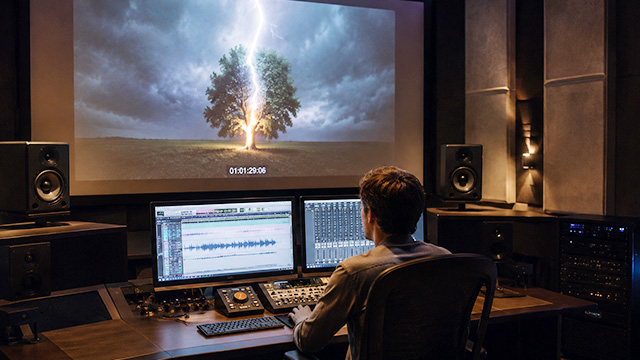
The image remains. But do the emotions remain as well?
Most likely, they do not.
We are used to experiencing films through our eyes, but great video is born from far more than what appears on screen. Sound is the invisible half of every film. It is what makes us jump, laugh, worry, feel tension, or experience a moment of peace. If the image tells the story, sound allows us to live that story alongside the characters.
When Sound Becomes Magic
In everyday life, we rarely pay attention to the sounds around us. The rain tapping against a window, the creak of a wooden floor, rustling leaves, the distant hum of a city—these all seem like part of the natural background.
In film, however, nothing is accidental.
Every sound is carefully selected, created, or enhanced. Sometimes a character’s footsteps are recorded separately in a studio. Sometimes the clash of swords is recreated using metal pipes. Sometimes the roar of a fantastic creature is actually a blend of animal voices, machinery, and human breathing.
The audience never notices.
And that is precisely why the job has been done well.
True audio design never calls attention to itself. Instead, it quietly immerses the viewer in the story, making every moment feel believable and alive.
Sound Effects: The Details That Build a World
Try to imagine a film without sound effects.
No footsteps.
No creaking doors.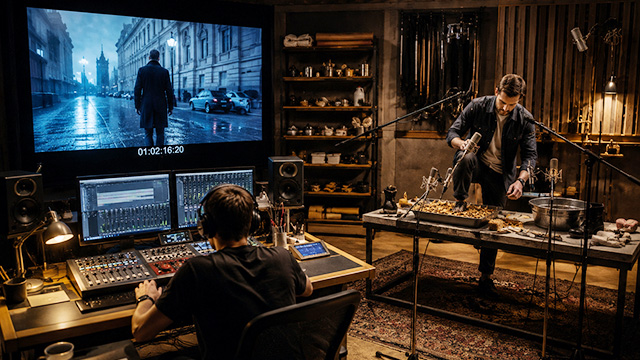
No wind.
No crowd noise.
No clinking glasses.
No engine rumble.
The image would instantly feel flat and artificial.
Sound effects create the space around the viewer. They help us understand the size of a room, the distance between objects, the atmosphere of a location, and even the personalities of the characters themselves. The light click of high heels can reveal more about a person than several lines of dialogue. The groan of an old elevator can create tension long before anything frightening happens on screen.
A film’s world does not exist only within the frame. It extends far beyond it, and sound is what allows us to feel that larger reality.
The Art of Mixing: When Everything Becomes One
Capturing great sounds is only half the process.
Imagine an orchestra with dozens of instruments playing at once. If every musician tried to play louder than everyone else, the result would be chaos.
The same principle applies to film.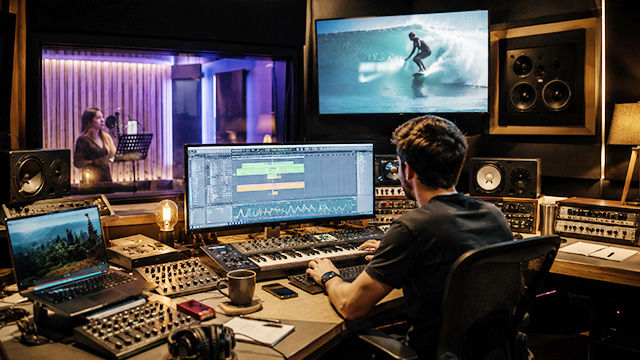
There is the actor’s voice. There is music. There are environmental sounds. There are special effects. There are movement sounds, traffic, nature, and hundreds of other audio elements.
The job of the sound engineer is to transform all of them into a single composition.
Sometimes the music must take center stage.
Sometimes it must step aside for dialogue.
Sometimes it must almost disappear entirely, leaving the audience alone with the moment.
Good mixing never draws attention to itself. Viewers simply feel that everything sounds natural and balanced. But the moment something goes wrong, the illusion begins to fall apart. Most people have watched a video where the music overpowers the dialogue or important lines are lost beneath background noise. Even the most beautiful visuals become exhausting when the sound is not working properly.
The Power of Silence
Paradoxically, one of the most powerful tools in audio design is silence.
We tend to think that a film should always be filled with sound. Yet there are moments when the absence of sound has a far greater impact than any music ever could.
Just before danger strikes.
Immediately after a tragedy.
In the moment a character faces a life-changing decision.
Silence makes the heart beat faster. It sharpens attention, heightens anticipation, and allows emotions to resonate more deeply than words alone. There is a reason so many great directors use silence as a creative tool.
Sometimes silence speaks louder than thousands of sounds.
Music: The Emotional Guide to the Story
If sound effects create the world of a film, music creates its soul.
The very same scene can feel completely different depending on the soundtrack.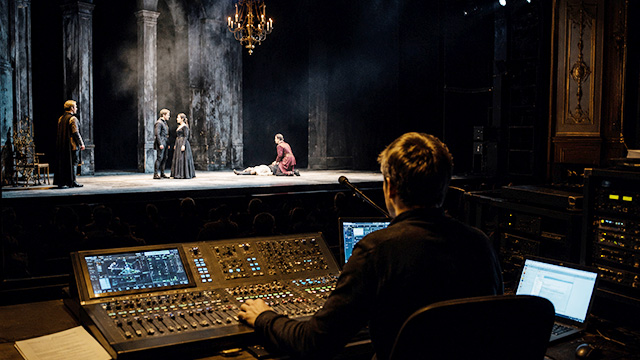
Imagine a character walking through the city at night.
Add a romantic melody, and the audience feels warmth and hope.
Add dark, unsettling tones, and that same scene suddenly feels uneasy.
Introduce energetic electronic music, and it becomes the beginning of a chase or an adventure.
Music guides our emotions, shapes our perception of a moment, and amplifies the power of the visuals. It speaks directly to human feelings, often before the conscious mind has even processed what it is seeing.
How the Wrong Music Can Ruin a Great Film
Choosing the right soundtrack is far more delicate than it may seem. Sometimes a single poorly chosen piece of music is enough to destroy the atmosphere of an entire scene. Imagine a heartbreaking farewell accompanied by upbeat dance music. Or a tense investigation scene underscored by a light romantic melody. Even outstanding cinematography, beautiful production design, and brilliant acting can lose their impact because of musical dissonance.
The audience may not always be able to explain what feels wrong.
But they will feel it.
The right music supports the story.
The wrong music competes with it.
That is why creating a soundtrack requires just as much care and attention as creating the visuals themselves.
Why Sound Is Half of a Film’s Success
There is a famous industry joke: audiences can forgive mediocre visuals, but they almost never forgive bad sound.
Like many jokes, it contains a great deal of truth.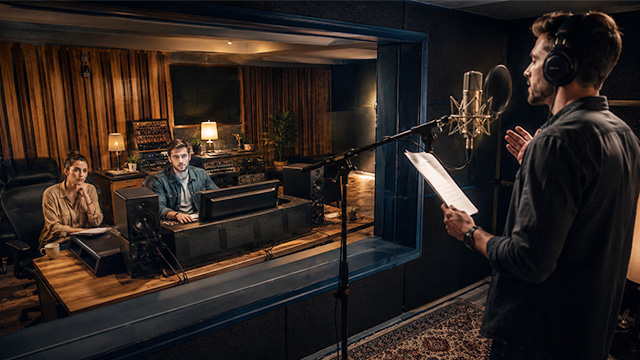
A scene can be shot on a modest camera, but if viewers can clearly hear every emotion, every breath, every subtle detail, they will remain fully immersed in the story.
But introduce distracting noise, unclear dialogue, or poor-quality audio, and the magic of cinema begins to disappear.
Sound does not simply accompany the image.
It brings it to life.
It creates atmosphere, strengthens emotion, directs the audience’s attention, and helps every frame tell its story with greater depth and impact. That is why audio design is not a secondary element, nor is it merely background music. It is a complete artistic language—one without which modern cinema would be impossible to imagine. The projects that stay with us for years are born from the combination of powerful visuals and expertly crafted sound.
Our portfolio includes a wide range of work in film dubbing and post-production, original music composition, and audio production for live shows, advertising campaigns, and theatrical performances. We believe that great sound does more than accompany an image—it transforms it into a story that audiences can truly feel, again and again.
And if your content needs professional audio production of any kind, give us a call—and make sure your message is heard.