Multimedia Content Trends for Exhibitions in 2026: What Works and What Is Already Outdated
An exhibition stand is no longer simply a structure made of panels and a counter with brochures. In 2026, it has evolved into a hybrid environment where architecture, lighting, sound, tactile experiences, and digital content work together as a unified, carefully designed system. The days when putting up a single LED screen was enough are gone. Today, visitors expect more than information — they expect an experience. But behind every “wow” moment there should be leads, contacts, and brand recognition. Let’s take a look at which multimedia formats actually deliver results and which ones are better left behind.
From Screens to Environments: The Major Shift in 2026
The key trend shaping everything else is the transition from individual multimedia elements to a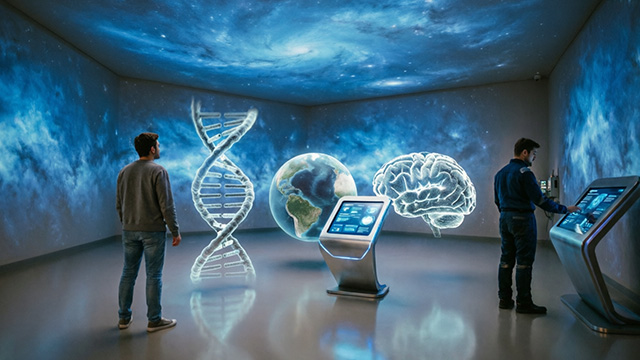 fully immersive environment. Instead of using a single flat LED wall as a backdrop, leading exhibitors are creating fully immersive spaces: floor-to-ceiling LED panels, curved configurations, LED canopies, and even LED floors. This is not simply about aesthetics — it changes the way visitors interact with the content. Visitors find themselves inside the content rather than standing in front of it.
This evolution is closely connected to the concept of “sensory perception,” which has become a major theme at a number of key exhibitions in 2026. The exhibition stand now engages all the senses: tactile materials, emotionally driven lighting scenarios, sound design, and even carefully selected scents. Neuroaesthetic approaches and interactive formats make it possible to create a deeper emotional connection with the brand.
What This Means for Business
The exhibition stand is no longer a static “showcase.” It has become a dynamic, story-driven environment that captures visitors’ attention and guides them along a carefully designed journey. This has a direct impact on the marketing metrics associated with exhibition participation.
VR and AR: From “Trying It Out” to Driving Sales
Virtual and augmented reality remain among the leading trends, but in 2026 their use has become much more pragmatic.
AR: Accessible and Easy to Use
The key word for AR in 2026 is accessibility. To launch an AR experience at an exhibition stand, all you need to do is place a QR code on your promotional materials. Visitors scan it with their smartphones and see additional information overlaid onto the real-world object. This makes it possible to demonstrate products in action, showcase hidden technical specifications, or bring static exhibits to life.
AR navigation is becoming standard at large exhibitions: digital twins of exhibition spaces with AR guidance help optimize visitor flows and make business communication more efficient.
Effectiveness: AR can deliver strong results at minimal cost. It requires no specialized equipment, works on visitors’ own devices, and is easy to update. It is ideal for products that are difficult to demonstrate physically at a stand, such as large-scale equipment, complex technical solutions, or interior spaces.
VR: Deep Immersion for Complex Sales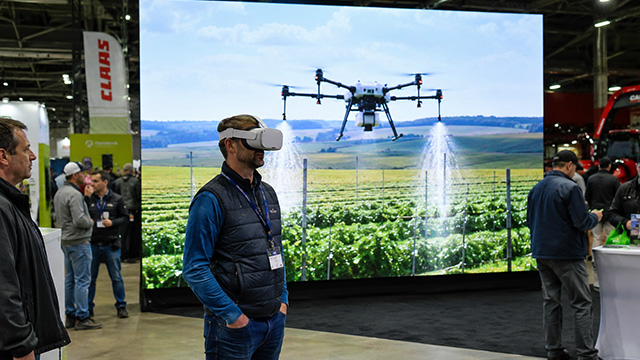
VR is all about immersion. Visitors put on a headset and enter a fully simulated environment. At exhibitions in 2026, VR is being used not as entertainment, but as a sales tool. Instead of traditional catalogs and PowerPoint presentations, visitors experience a short, several-minute VR session that is fully controlled by a sales manager via a tablet.
This approach allows customers to “touch” the product, see it in operation, and understand its scale. For B2B products with long sales cycles, this can shorten the journey from initial awareness to a purchasing decision.
Effectiveness: VR provides maximum depth of engagement, but requires significant investment in content and equipment. It is justified for premium brands and complex technical products where visualization is critical. Research shows that well-designed digital exhibitions incorporating VR and AR can attract more visitors than traditional formats.
What Is Already Outdated?
Mass distribution of VR headsets without a clear scenario or objective. If a visitor simply puts on a headset, watches a 3D video, and takes it off, that is “wow for the sake of wow.” VR only works effectively when it is integrated with a sales representative who guides the experience and immediately follows the session with the right questions.
Projection Shows and Video Mapping: From Building Facades to Exhibition Stands
In 2026, projection technologies have moved beyond building facades and large-scale shows. At exhibitions, they are being used to create dynamic spaces that change throughout the day.
At major professional AV equipment exhibitions, a key trend has been the shift from static projections to interactive and dynamic solutions. Manufacturers are showcasing projectors of all sizes — from ultra-bright models designed for large spaces to compact devices that can be integrated into virtually any part of an exhibition stand.
One of the most interesting trends is generative projection mapping, where AI creates visual assets in real time based on scanned architecture. The same exhibition stand can tell a different story every hour of the show.
Immersive Tunnels and 360° Rooms
Immersive tunnel environments with real-time interactive visuals demonstrate how storytelling is moving beyond traditional screen-based formats. This format completely captures visitors’ attention and creates an “Instagrammable moment” — something visitors photograph, share, and remember.
Effectiveness: Projection shows deliver a powerful visual impact and strong brand awareness. However, they are expensive to produce and require professional content. They are justified for brands where visual image and viral content creation are important. For conventional B2B stands, they are often excessive.
Immersive Rooms: Aesthetic Experience as a Point of Attraction
Immersive rooms are enclosed spaces where visitors are completely surrounded by content: 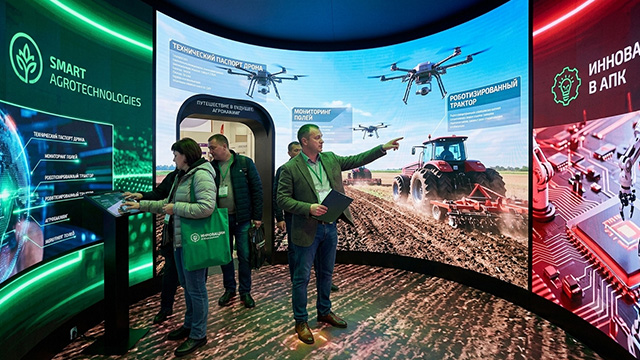 projections on walls, floors, and ceilings, multi-channel sound, and carefully designed lighting scenarios.
The central theme is the concept of “sensory perception”: an exhibition becomes an immersive environment where tactile materials, emotional lighting scenarios, sound design, and even the scent of the space all matter. For an exhibition stand, an immersive room is a high-engagement zone. Visitors step inside, disconnect completely from the surrounding noise, and focus 100% on the brand.
It is an ideal space for premium presentations, communicating company values, or launching a new product.
Effectiveness: Maximum engagement and depth of interaction. Visitors typically spend several minutes inside — enough time for a sales representative to establish a meaningful dialogue. However, immersive rooms require significant floor space and a substantial budget.
What Is Already Outdated?
Immersive rooms without a clear narrative structure. If the only thing happening inside is a beautiful video playing on the walls, it is simply a waste of money. Visitors should clearly understand what they saw, what they remembered, and what they learned.
Gamification: A Game That Drives Sales
Gamification is not simply about entertainment. In 2026, it has become a tool for contact collection and lead generation.
Exhibitions typically have three standard objectives: collecting contacts, demonstrating a product, and arranging meetings. Gamification can strengthen all three. Games work because they answer visitors’ basic question: “What’s in it for me?”
A well-designed game gives people a reason to interact that is not directly connected to a sales pitch, completely changing the dynamics of communication.
What Works in 2026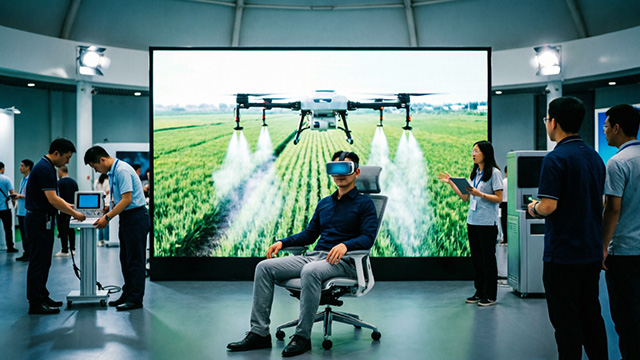
Branded product quizzes with participant leaderboards
Digital avatars that introduce the company and answer frequently asked questions
Tournament mechanics with leaderboards that encourage visitors to return to the stand
Stand-based quests where visitors complete tasks and receive prizes
Digital activations on touchscreens and kiosks that do not require a large exhibition footprint
More than one-third of the global exhibition industry believes that event formats need to be updated with a greater focus on interactivity and engagement.
Effectiveness: Gamification delivers measurable results — contacts, time spent at the stand, and repeat visits. Budgets range from simple mobile applications to complex interactive installations. It is suitable for virtually any market segment.
What Is Already Outdated?
Primitive “press a button and get a prize” mechanics with no connection to the product. Gamification should be organically integrated into the exhibition and communicate the brand story rather than exist independently from it.
How to Choose the Right Format for Your Goals and Budget
The main principle of 2026 is: start with the scenario, not the technology.
Here is a decision-making roadmap:
|
Brand Objective |
Recommended Format |
Budget |
|
Maximum number of contacts and leads |
Gamification + AR activations |
Low–medium |
|
Deep product immersion |
VR zone managed by a sales representative |
Medium–high |
|
Visual image and brand awareness |
Projection show / immersive room |
High |
|
Navigation and visitor convenience |
Smartphone-based AR navigation |
Low |
|
A comprehensive multi-sensory experience |
Full immersive environment (LED walls + sound + lighting) |
Very high |
Key Questions to Ask Before You Start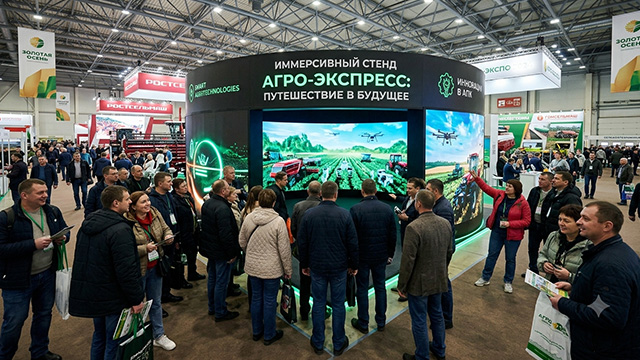
What business objective does the multimedia solution address? If the answer is “to make it look beautiful,” go back to the strategy.
Who is your visitor? Engineers, executives, young professionals? The answer determines the language and format of your content.
What do you want to measure? Contacts, time spent at the stand, social media mentions?
How will the content live on after the exhibition? Video from an immersive room can be reused in advertising, while an AR application can be adapted for your website.
Conclusion
2026 is the year of purposeful immersive solutions. Technologies have become more accessible, while visitors have become more sophisticated. A flat screen and loud sound are no longer enough. The winners are those who create an environment, engage visitors through play, and make them feel like part of the brand story.
But one fundamental rule remains unchanged: multimedia is a tool, not the goal.
Before integrating a million-ruble VR headset or a projection cube into your stand, ask yourself: “How will this help us sell?” If there is no answer, it is simply “wow for the sake of wow.” If there is an answer, you are on the right track.
A modern exhibition stand is not just a structure. It is a hybrid environment that starts working long before the exhibition opens and continues generating results long after it closes.
Invest in the experience and the strategy, not just the hardware — and your stand will become 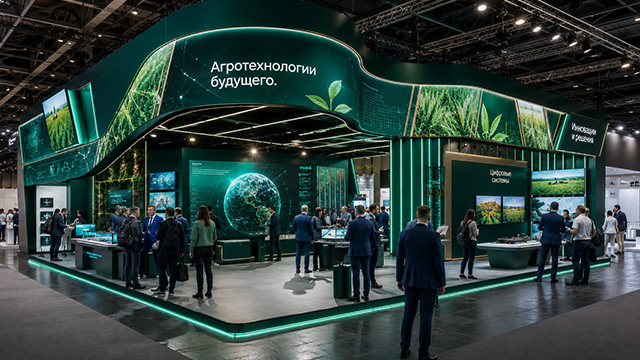 more than just another point on the exhibition floor. It will become a key destination for your customers.
Planning to Exhibit?
We can help you select multimedia solutions tailored to your objectives and budget — from interactive presentations to fully immersive environments. Our specialists will develop the concept, prepare the content, and integrate multimedia into the stand’s visitor journey so that technology genuinely helps attract attention and generate leads.