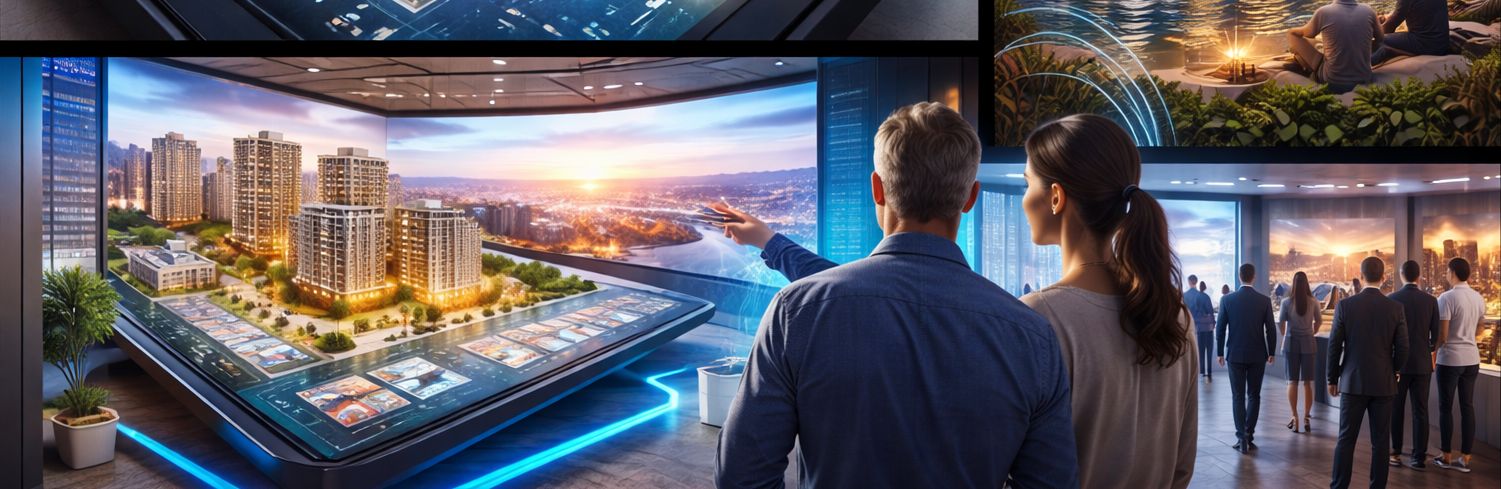
Architectural Storytelling: How to Tell a Story Through Space
In contemporary architecture, it is no longer enough to build a beautiful structure. The market is saturated with visually striking projects, technology has advanced dramatically, and audience expectations have become deeper and more refined. Today, it is not enough to showcase square meters — it is essential to tell a story.
This is where architectural storytelling begins — an art and a technology that uses space to convey an idea, a brand philosophy, the lifestyle of future residents, and the emotional image of a project.
Multimedia in architecture is no longer an addition; it has become a full-fledged language of narrative.
Space as a Script
Every architectural project begins with a concept. Yet a concept is text, a sketch, a collection of meanings. For a potential buyer or investor to truly feel it, the idea must be translated into a sensory experience.
Architectural project visualization, 3D tours, interactive presentations for developers, lighting and sound scenarios — all these tools transform dry drawings into a living story.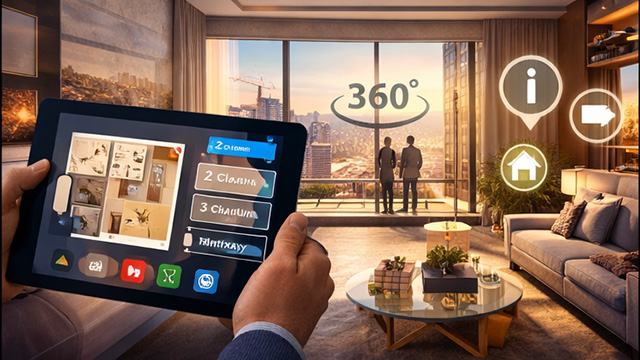
Architectural storytelling answers the following questions:
• Who will live or work in this space?
• How does the mood change throughout the day?
• What will a person feel when crossing the threshold for the first time?
• What philosophy stands behind the façade?
When we create multimedia support for a property, we are essentially writing its script.
Visualization: The First Level of Emotional Connection
Photorealistic 3D real estate visualization is not merely a demonstration of façades and floor plans. It is the art of guiding attention and shaping mood.
Warm sunset light creates a sense of comfort. Cool dawn tones emphasize the dynamic c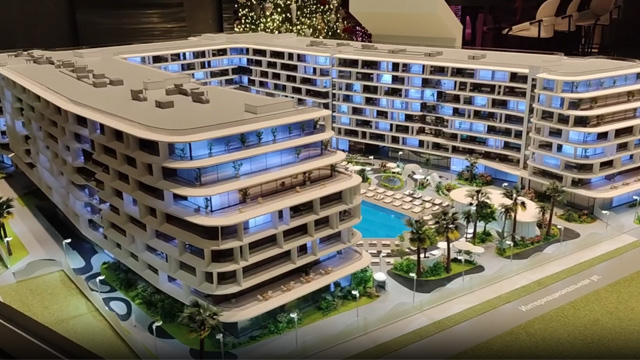 haracter of a business district. Lively animation of people and cars adds rhythm. As the camera moves along its path, it seems to lead the viewer through the storyline.
Modern technologies make it possible to showcase:
• changes in time of day
• seasonal transformations
• various lighting scenarios
• the vibrancy of life within the space
Thus, architectural visualization becomes a powerful sales tool and a means of emotional engagement.
3D Tour: The Effect of Presence
If static visualization is a single film frame, then a 3D real estate tour is a full-fledged journey.
Interactive virtual tours allow users to: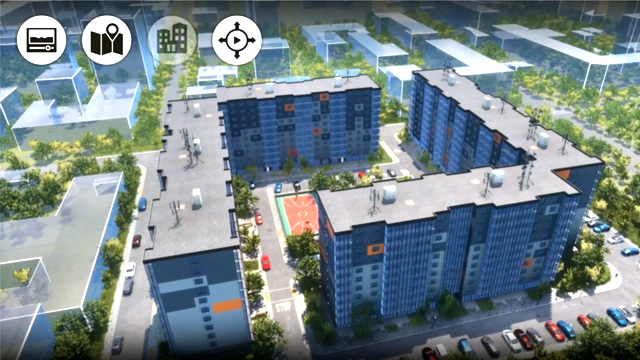
• move freely through the space
• change finishes and materials
• view floor plans at a 1:1 scale
• explore the complex’s infrastructure
Unlike a traditional presentation, here the user becomes a participant in the story. They do not simply observe — they experience it.
For developers, this is especially important: a virtual presentation of a residential complex makes it possible to sell the property even at the excavation stage. The buyer sees not an abstract project, but their future morning on the balcony.
Light as Dramaturgy
Light is one of the most powerful tools in architectural storytelling.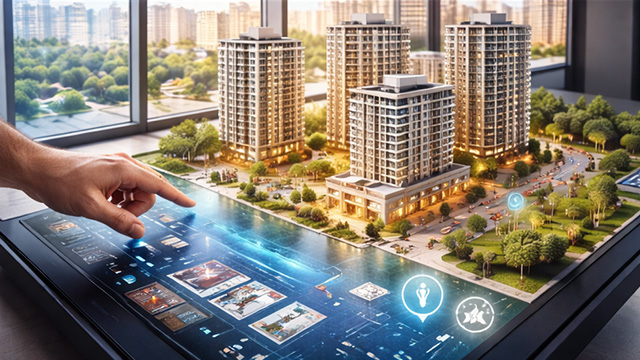
With lighting scenarios, it is possible to:
• emphasize the project’s prestige
• create an atmosphere of privacy
• highlight key architectural elements
• set the emotional rhythm of the space
Interactive facade lighting, media façades, and dynamic light installations transform a building into a living organism.
In premium projects, light becomes part of branding. It shapes a recognizable image and strengthens market positioning.
Sound and Audio Effects: The Invisible Part of the Story
Architecture is rarely perceived through sound, yet it is audio design that creates depth.
Imagine a developer’s presentation showroom: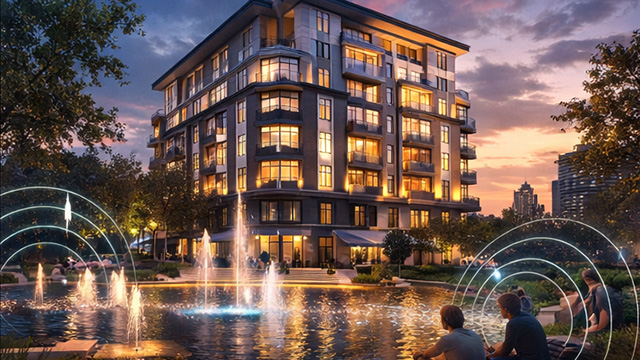
• the gentle rustle of leaves in the courtyard
• the distant splash of water along the waterfront
• the muted rhythm of the city
• soft ambient sound in the showroom
Sound creates a sense of reality. It influences the subconscious, forms associations, and enhances emotional response.
Immersive multimedia solutions for real estate increasingly include spatial audio, making presentations truly engaging.
Presentation Software for Developers: When Technology Drives Sales
Modern presentation software for developers integrates: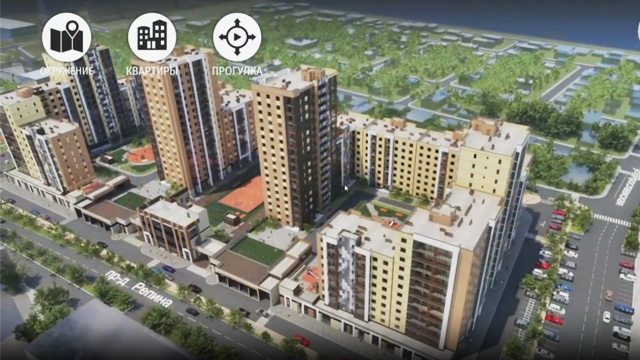
• an interactive map of the complex
• real-time apartment selection
• floor plan visualization
• CRM integration
• analytics of customer interest
This is no longer just a beautiful image — it is a comprehensive sales tool.
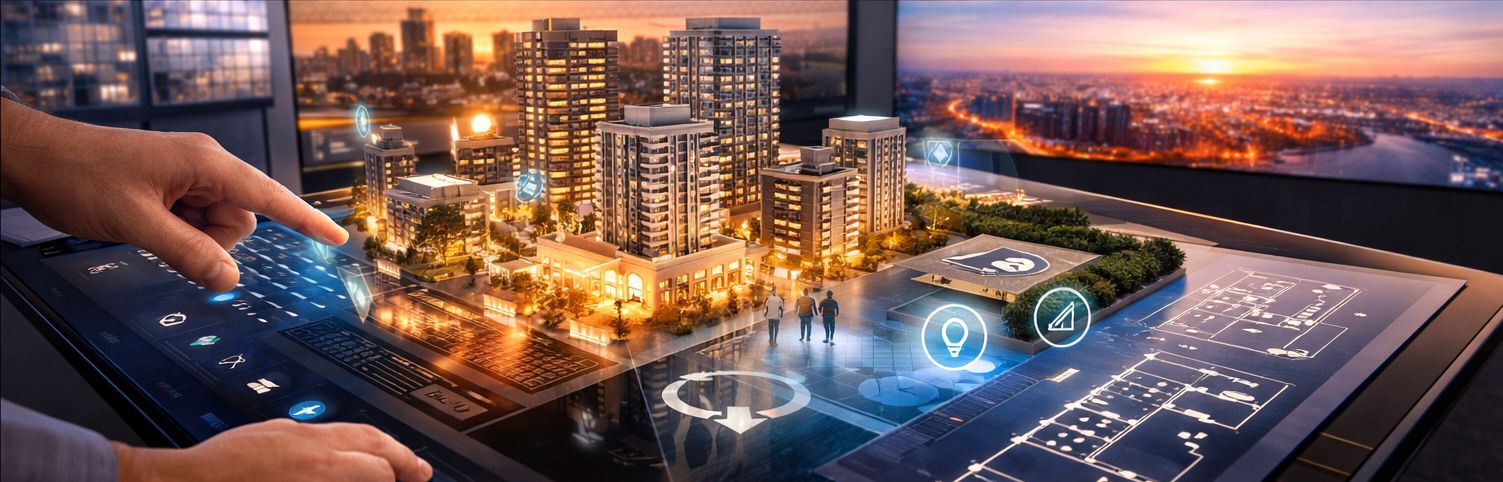
Interactive tables, touch panels, and large video walls allow a sales manager to guide a client through the project’s story: from the overall concept to a specific apartment. In this way, a multimedia studio becomes a strategic partner for the developer.
Interactive Architectural Model as a Media Platform: The MANDARIN Example
A striking example of architectural storytelling is the creation of the interactive MANDARIN model, implemented by OM Studio.
In this project, a physical architectural model was combined with digital technologies:
• dynamic zone lighting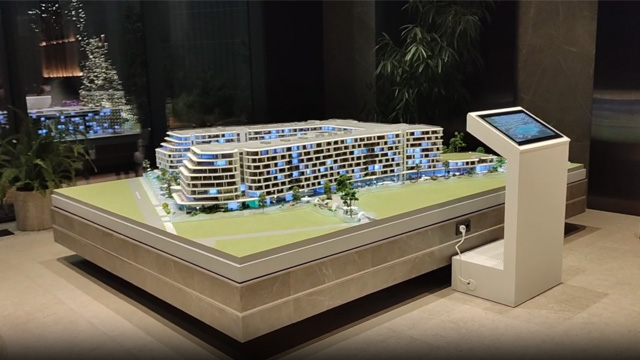
• projection-based visualization of life scenarios within the complex
• interactive control via a touch interface
• day/night mode switching
• infrastructure highlighting
A potential buyer sees more than a scale model — they witness the neighborhood come to life. Windows light up, the courtyard fills with warmth, and public spaces begin to function.
Such an interactive architectural model for developers becomes a powerful positioning tool and significantly increases sales conversion.
A Story Instead of Square Footage
In an era of intense competition, projects that communicate values stand out:
• privacy
• family orientation
• dynamism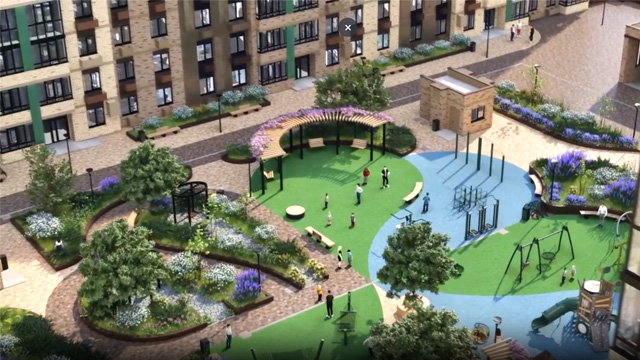
• sustainability
• status
Through multimedia solutions, we translate these abstract categories into tangible experiences.
Architectural storytelling is when:
• the facade speaks of character
• the courtyard tells a story of community
• light emphasizes philosophy
• sound creates atmosphere
• the digital environment transforms a property into a narrative
Why This Matters for Developers
Investment in multimedia technologies for real estate pays off through: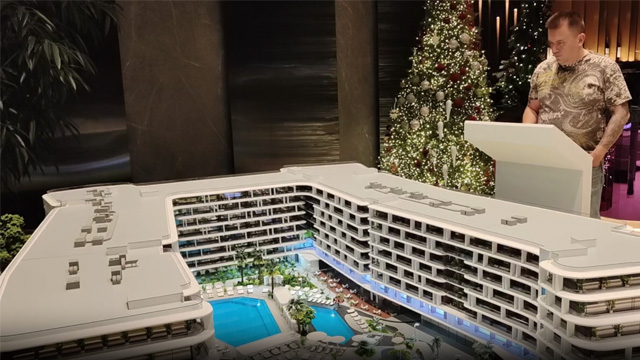
• accelerated buyer decision-making
• increased trust
• enhanced brand status
• strengthened marketing campaigns
• the ability to sell projects at early construction stages
Today, clients choose not an apartment — they choose a lifestyle. And multimedia makes it possible to create and present that lifestyle.
Space That Tells a Story
Architectural storytelling is a synthesis of architecture, technology, design, dramaturgy, and marketing. It is when a project ceases to be a collection of floor plans and becomes an emotional experience.
Omelchak Multimedia Studio follows this paradigm and creates more than just visualization or a 3D tour. We create stories that remain in memory and become decisive arguments in favor of choice. Because strong projects are always more than walls. They are ideas embodied in space. Call us, and we will create the story of the property of your dreams.