Multisensory Experience: Why Scent and Sound Are Remembered Longer Than a Picture
Picture an exhibition hall. Hundreds of booths, thousands of banners, dozens of screens flashing the same graphics over and over — logos, slogans, infographics. A visitor's eyes grow tired within half an hour, and most of what th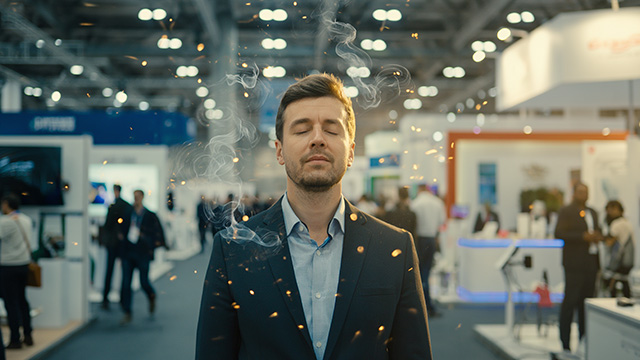 ey've seen dissolves from memory before they even reach the next pavilion. Now imagine a different moment: they walk past a booth and suddenly catch a faint aroma of freshly ground coffee or wood after rain, hear a quiet, almost tangible sound — and something inside them simply stops. They don't yet know what company this is, but their body has already said: "Stay here a moment."
This is the power of multisensory marketing — a discipline that is now reshaping our understanding of what a modern exhibition stand should be. And it isn't about chasing "unusual gimmicks." It's about how human memory actually works.
Why a Picture Loses to Scent and Sound
The brain processes visual information quickly, but it also forgets it just as quickly. The visual cortex has been overloaded since childhood: we see thousands of images every day — ads, signs, social media feeds. To compete for attention through visuals alone, you need to be either a giant with a billion-dollar budget or an exceptionally inventive company.
Smell works differently. The olfactory bulb is the only sensory system connected directly to the limbic s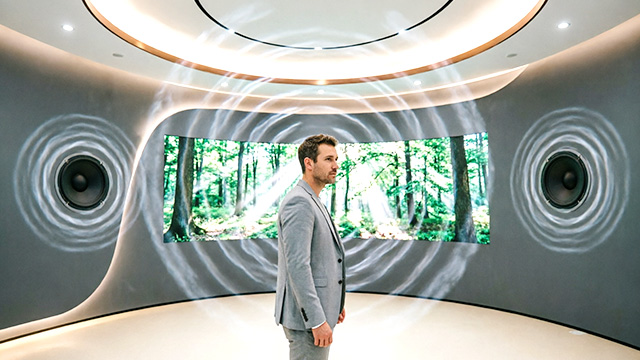 ystem — the region responsible for emotion and long-term memory — without passing through any "intermediate stations" in the brain. In simple terms: scent isn't filtered through logic, it strikes straight at the emotional center. That's why a single aroma can instantly transport us back to childhood, to a grandmother's house, to a summer beach — faster than any photograph ever could.
Sound works in a similar way. We hear long before we learn to look consciously — hearing develops in a child even before birth. Auditory memory is one of the oldest and most durable forms of memory. That's why we can hum a famous brand's jingle years later, while its most recent ad banner is almost impossible to recall.
Add tactile sensations — what we touch with our hands — and you get a powerful cocktail of impressions, which is the foundation of the science known as sensory branding. It is this science that underlies truly memorable brand experiences at exhibitions today.
Sound Design for a Stand: Silence Is Also a Sound
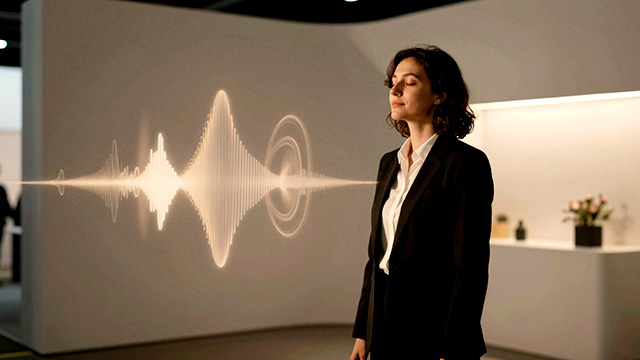
Many companies still believe that "sound for a stand" simply means loud music from a speaker or a voiceover video on repeat. In reality, well-crafted sound design for an exhibition stand is delicate work with the space of sound itself, where precision matters far more than volume.
Good sound design solves several tasks at once:
- Sets the mood. Soft ambient textures for a premium segment, a clear industrial rhythm for B2B manufacturers, lively dynamics for startups and digital companies.
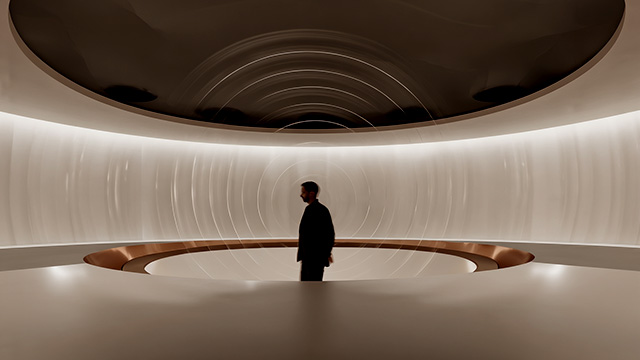
- Directs attention. Sound cues (a light signal when an interactive screen is activated, a distinct "click" when interacting with an exhibit) tell visitors where to look and what to touch, without a single word of instruction.
- Shapes zoning. On a large stand, sound helps divide the space: one sound layer at the entrance, another, more muted layer in the negotiation area, a third, more expressive layer in the demonstration zone. It functions as an invisible form of navigation.
- Builds recognition. A signature audio logo, repeated at every event, can over time become associated with the brand just as strongly as a visual logo.
And a special note on silence. Against the backdrop of a noisy exhibition hall, an island of deliberate acoustic quiet — or a very soft, muted sound — can have a stronger effect than a loud speaker. It creates a sense of "personal space" and invites the guest to come closer in order to hear.
Aromatherapy at Exhibitions: The Invisible Architect of Impressions
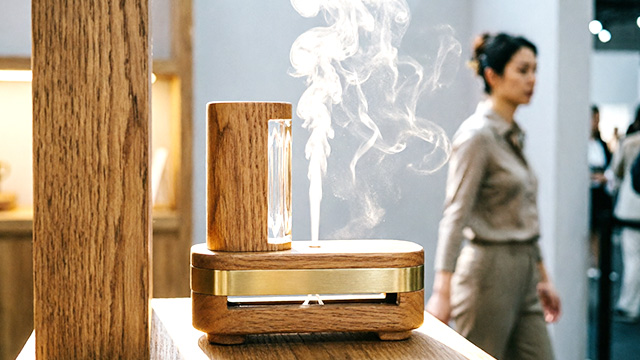
Perhaps the most underrated tool in the arsenal of multimedia stand design is scent. Aromatherapy at an exhibition isn't about candles or incense — it's precise engineering of impressions using professional scenting systems: diffusers with directional spray, aromatic modules built into the stand's ventilation, or local scent sources in the negotiation area.
How it works in practice:
- Scent as an extension of the product. An automotive brand might use notes of leather and metal. A furniture manufacturer might use woody, resinous tones. A cosmetics brand might use the same accords found in the product itself. This lets the visitor "sample" the brand before they've even picked up the product.
- Scent as an emotional anchor. Fresh citrus and mint notes energize and improve concentration — this works well in areas with dense information. Warm vanilla and woody tones, on the other hand, reduce anxiety and encourage conversation — ideal for negotiation zones.
- Scent as wordless navigation. Different zones of a stand can be "marked" with different scents, jus
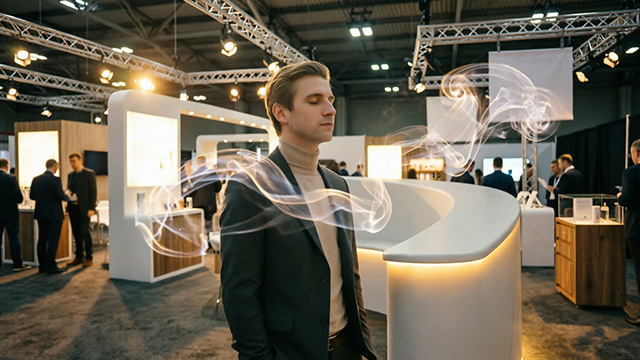 t as they are marked with light or color. Guests subconsciously register the boundaries of the space.
 - Scent as long-term memory. Here the science is especially generous: research shows that smells trigger emotional memories far more vividly and for far longer than visual images. Six months later, a visitor may not remember the logo, but upon catching a similar scent somewhere in a café, they may suddenly recall your stand clearly — and everything that happened there.
An important nuance: the scent should be barely perceptible. The goal isn't to perfume the space, but to create a subtle trail that registers at the edge of perception — this is precisely the kind of scent that works best for long-term memory, without causing irritation or fatigue.
Tactile Surfaces: What Hands Remember
Sight can be fooled by a rendered visualization, but hands cannot be fooled. Touch is the last line of authenticity. That's why thoughtfully designed tactile surfaces in a stand's design build trust in the brand just as effectively as an actual product sample.
What matters here: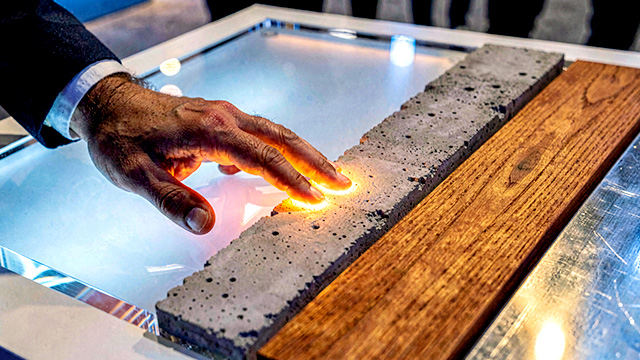
- Contrast of textures. Smooth acrylic next to rough concrete, warm wood next to cold metal — a contrast of textures makes the hand want to "explore" the surface, and with it, linger at the stand a little longer.
- Interactive tactile panels. Touch-sensitive surfaces that respond to contact with changes in lighting, sound, or on-screen imagery turn an ordinary gesture into a small performance — and people become more willing to engage in dialogue with the brand.
- Materials that match the product. If a company produces textiles, let guests feel samples of different densities. If it's building materials, let the hand feel the real texture, not a glossy picture on a banner.
- Temperature contrast. Few use this technique, but it is remarkably powerful: warm lighting at a reception desk paired with a cool metal door handle — the body registers these details unconsciously, but they shape an overall sense of quality and thoughtful design.
How It All Comes Together Into a Single Multimedia Exhibit
A truly powerful multisensory experience emerges not when sound, scent, and touch exist separately, but when they work in sync — like a single score written for the script of a visitor's movement through the stand.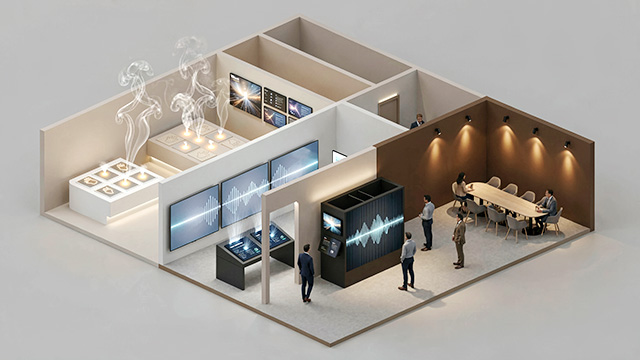
A good scenario looks something like this: a guest approaches — they're greeted by a light, barely noticeable scent and a soft welcoming sound cue. They touch an interactive panel — the texture beneath their fingers changes, the screen comes to life, the sound grows slightly richer. They move into the demo zone — here the audio is denser, synchronized with video content on the screens, and the materials under their hand are the same ones the company uses in production. In the negotiation area, everything quiets down again: dimmed lighting, a warm scent, comfortable acoustics for conversation.
This is no longer a collection of exhibits, but a full-fledged direction of experience — a small performance in which the visitor is not a spectator but a participant. It is precisely this approach that distinguishes genuinely thoughtful multimedia stand design from a simple set of screens and banners.
Why This Benefits Business, Not Just "Looks Nice"
Behind the poetry lies a fairly pragmatic logic. Multisensory solutions at exhibitions solve concrete business problems:
- They increase contact time. A visitor engaged through several channels of perception stays at the st
 and longer — giving the sales team more time for conversation.
 - They increase lead conversion. An emotionally engaged guest is more willing to leave their contact information and agree to further conversation.
- They build brand recognition even months later. It is precisely long-term memory — of scent and sound — that leads a person to recall a company six months later, upon seeing a similar packaging color in a store or hearing a similar melody.
- They set the company apart from competitors who still rely exclusively on visuals — the most overloaded and least "long-lasting" channel of perception.
How to Implement This: A Full-Cycle Company's Perspective
A multisensory experience can't be "added" to a finished stand at the last moment — the scent module, sound system, and tactile zones need to be built into the project from the concept stage, together with the space layout and the visitor's movement scenario. That's why such solutions are best created where the stand's architectural design, the construction of the structures, and the creation of multimedia content all happen in the same hands, following a single scenario — rather than being assembled from disparate contractors in the final week before the show.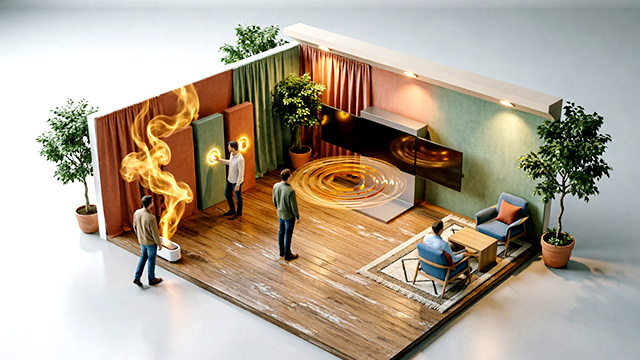
Our team designs exhibition stands and their multimedia content as a single organism: from architectural concept and construction of structures to sound design, scent solutions, interactive tactile panels, and video content. We don't "decorate" a stand with effects at the last minute — from the very start, we think about what your future client will feel, hear, and touch, because these are the impressions they will carry with them — and remember far longer than yet another beautiful picture.
The world is changing. Visitors no longer just want to look — they want to feel. And a full-cycle company that understands this creates not just stands, but sensory universes, where every breath, every touch, and every sound works toward one goal — making the brand unforgettable.
Ready to give your visitors a multisensory journey? We know where to start!